Ho Chi Minh City, February 09, 2026
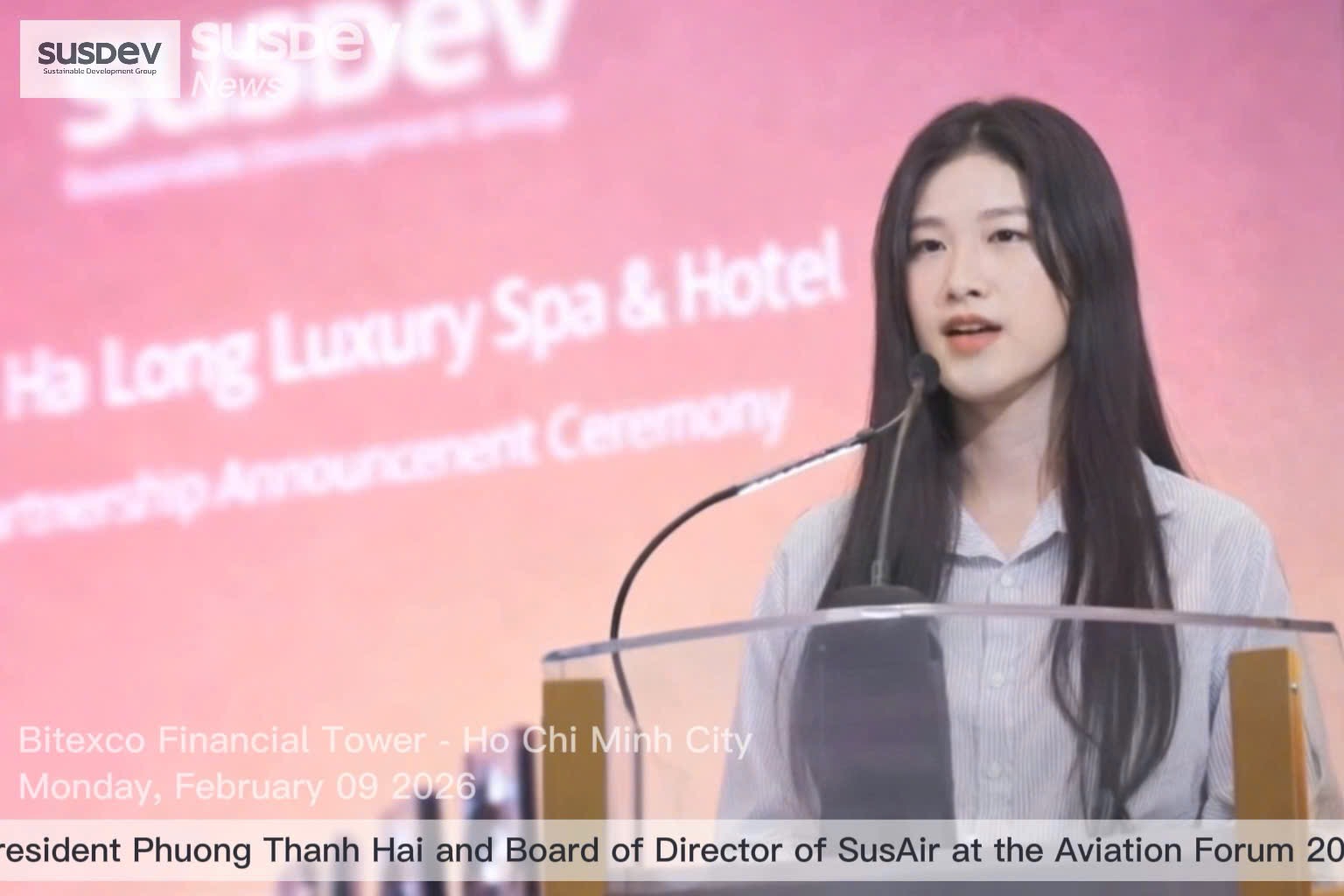
At the Aviation Forum 2026 held at Bitexco Financial Tower, Chairman Phuong Thanh Hai and the Board of Directors of SusAir delivered a comprehensive strategic address highlighting the critical role of Public–Private Partnerships (PPP) in accelerating sustainable aviation infrastructure development across Vietnam.
Representing the aviation infrastructure and airport landscape division of Susdev Group, Chairman Phuong Thanh Hai emphasized that Vietnam’s aviation growth trajectory requires not only capacity expansion but also a fundamental transformation in investment structure, governance transparency, and long-term asset management.
Strategic Context: Growth Pressure and Capital Mobilization
Vietnam’s aviation sector is experiencing sustained growth driven by regional connectivity, tourism expansion, and economic integration. Chairman Phuong Thanh Hai noted that traditional public investment models alone may not sufficiently address the increasing demand for terminal expansion, runway upgrades, airport city development, and multimodal transport integration.
“Infrastructure development must evolve from state-led financing to structured capital partnerships that balance risk, ensure accountability, and create long-term value,” Chairman Phuong Thanh Hai stated during the forum.
Three Pillars of the PPP-Centered Investment Framework
During the keynote session, SusAir introduced a structured investment framework built upon three core pillars:
- Institutionalized PPP Structures for Bankability
SusAir advocates for transparent, performance-based PPP mechanisms designed to attract domestic and international capital. The proposed framework focuses on:
• Risk allocation clarity between public authorities and private investors
• Revenue-sharing models aligned with long-term operational performance
• Independent governance oversight to enhance investor confidence
• Integration of airport city commercial zones to diversify revenue streams
Chairman Phuong Thanh Hai underscored that airport infrastructure must be developed as integrated economic ecosystems rather than isolated transport nodes.
- ESG-Integrated Infrastructure as an Investment Driver
Positioning ESG compliance as a strategic advantage rather than a regulatory obligation, SusAir outlined how sustainable master planning can increase project bankability and access to green financing instruments.
The framework incorporates:
• Climate-resilient design and energy-efficient terminal systems
• Carbon footprint assessment standards embedded at the planning stage
• Responsible land use planning aligned with long-term urban development
• Social impact mitigation and community engagement protocols
“Global capital increasingly prioritizes ESG-aligned assets. Aviation infrastructure must respond accordingly to remain competitive in capital markets,” Chairman Phuong Thanh Hai emphasized.
- Lifecycle-Oriented Asset Management and Operational Efficiency
Beyond initial construction phases, SusAir highlighted the necessity of lifecycle asset management models that ensure operational sustainability and long-term return on investment.
The strategy includes:
• Predictive maintenance planning
• Digital infrastructure monitoring systems
• Performance-based concession agreements
• Operational optimization through integrated design planning
This approach aims to reduce total lifecycle costs while improving asset resilience and service quality.
Positioning SusAir as a Strategic PPP Partner
Through its participation at Aviation Forum 2026, SusAir reaffirmed its role not merely as a design consultancy but as a strategic technical and planning partner within PPP frameworks. Leveraging multidisciplinary expertise in airport landscape planning, infrastructure integration, and sustainable development standards, SusAir seeks to contribute to the next generation of aviation projects in Vietnam and the broader Southeast Asian region.
Chairman Phuong Thanh Hai concluded that sustainable aviation infrastructure development must align financial feasibility, environmental responsibility, and governance transparency to secure long-term competitiveness.
The Aviation Forum 2026 gathered policymakers, infrastructure developers, financial institutions, and aviation stakeholders to discuss investment mechanisms and regulatory reforms supporting Vietnam’s aviation modernization agenda.
 Susdev Group Holdings Limited